My daughter was about six years old when I first noticed her learning difficulty. I didn't know what to do. She often looked depressed and showed signs of anxiety. She was my first child, so I had no experience to draw on — and no relatives or friends who knew children well enough to guide me.
At seven, things were no better. It broke my heart to see her looking, at times, almost 'lifeless'. So I decided to seek professional help and booked an appointment with a pediatrician. He turned out to be a lovely young man who smiled a lot; gazing at that easy smile helped me keep my racing heart in check. My mind had gone blank — some part of me feared he would tell me my daughter had only days to live.
He spent ample time with her, examining one thing after another. Then he broke the news: "Your daughter is autistic." Those words would change my life forever. I remember my heart sinking. I was overwhelmed, because I had prepared for nothing like it. I went home and buried myself in research about caring for a child with autism — and I remembered, with shame, how hard I had been on her for failing to learn the things I believed every girl her age should know. I am certain I would have treated her differently had I known earlier — ideally within the first six months of her life. It would have changed everything about how I cared for her.
What I Learned About Autism
As I studied to understand my daughter better, I found a report by the Center for Disease Control and Prevention (CDC) estimating that 1 in 68 children have Autism Spectrum Disorder. ASD is a condition that shows itself in social interaction, behaviour, and cognition — and the delayed appearance of symptoms is exactly what makes early diagnosis so difficult.
It is possible to diagnose autism between 18 and 24 months — yet most children are diagnosed only after the age of four. The reason is that today's diagnostic procedure depends entirely on clinical observation. Some children simply don't show signs until they are older, and the observational process itself takes long hours.
While genetic causes are linked to around a third of reported ASD cases, the remaining two-thirds are believed to arise from a mix of factors — rare genetic variants, mutations, and combinations of environmental influences.
There is also a report that 1 in 100 Britons has autism, and that it is diagnosed more often in boys than in girls. For now, parents must wait until their children are between two and four before specialists can carry out a full assessment. But what if autism could be spotted earlier? Would it change things for the parents — and for the children?
Using a Blood Test to Diagnose Autism
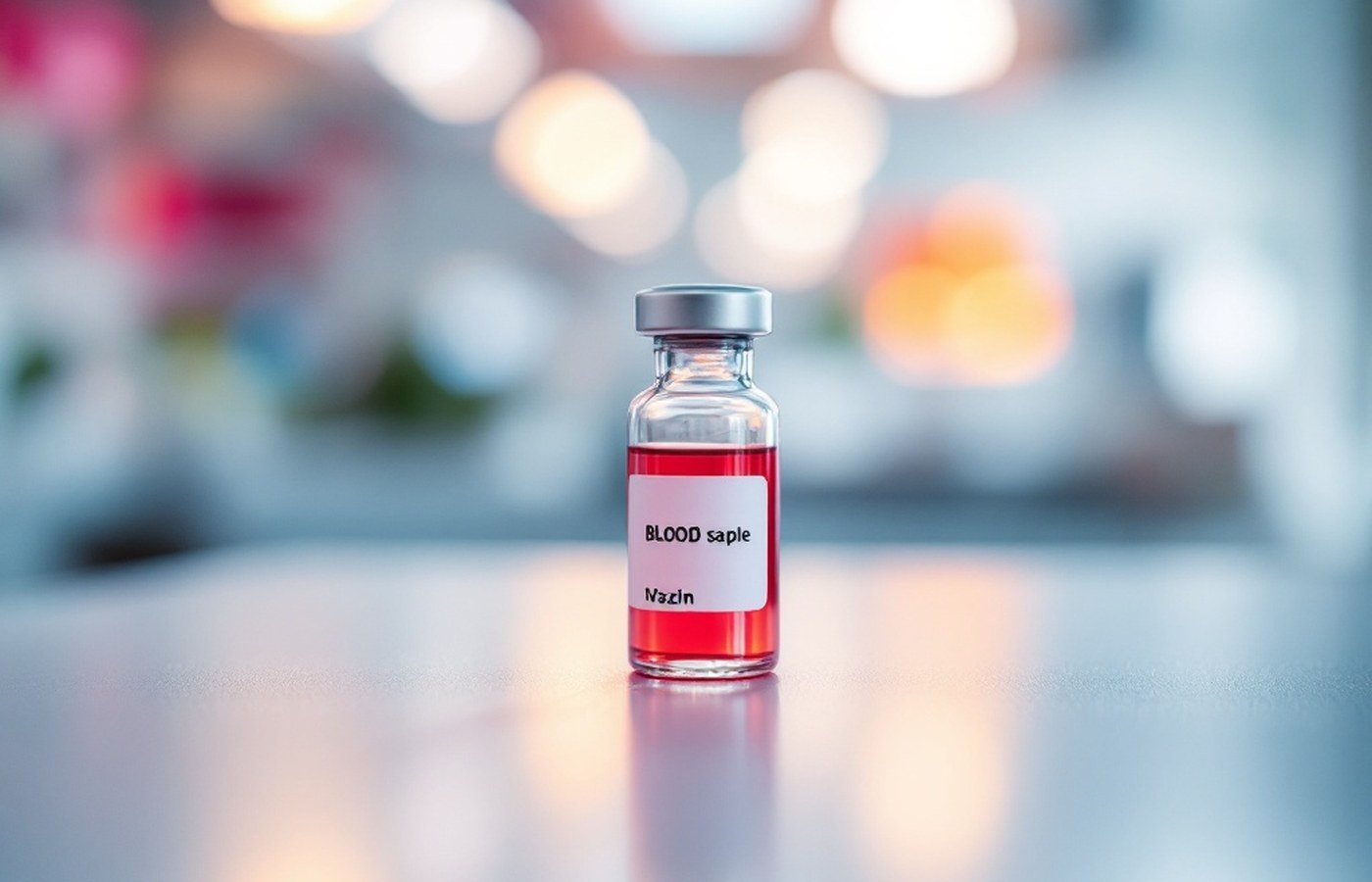
From what I've found, the idea of using a blood test to detect autism is not new — but we may finally be getting close to making it a reality. As early as 2012, researchers at Boston Children's Hospital were analysing the differences in gene expression between children with ASD and those without. The blood-based test they developed detected autism with a good degree of accuracy — especially among boys.
Since then, the studies have only improved. One of them was reported by the Independent in February 2018: University of Warwick researchers linked damage to blood plasma proteins with ASD. Children with ASD tend to carry higher levels of advanced glycation end products (AGEs) and dityrosine (DT), an oxidation marker.
The Warwick team, led by Dr. Naila Rabbani, collaborated with another group at the University of Bologna in Italy. Together they analysed blood and urine samples from 38 children diagnosed with ASD and 31 children without the condition, who served as controls.
Another team, led by Juergen Hahn, a professor at the Rensselaer Polytechnic Institute, repeated the experiment with a wider test group — and their report, published in the Bioengineering & Translational Medicine journal, told the same story.
Using 24 metabolites from 149 individuals, researchers were able to detect ASD with an accuracy of 96.1 percent.
Hahn and his team examined the transsulfuration pathway and the methionine cycle — the two biochemical pathways most strongly linked to ASD. They studied 24 metabolites drawn from 149 individuals, some previously diagnosed with ASD and some not, and the metabolites identified the condition with an accuracy of 96.1 percent.
The Benefits of Earlier Diagnosis — and the Limits of the Research

The idea of diagnosing autism earlier genuinely excites me — and I would wager it excites every mother caring for an autistic child. It would be an enormous relief if parents no longer had to wait years to learn what is happening with their children. If autism is identified earlier, children get the opportunity to receive the right treatment — including behavioural therapy — earlier, which could in turn lead to a higher IQ and improved language. Dr. Rabbani has suggested that further testing may reveal specific plasma and urinary 'fingerprints' of these damaging compounds (as reported by Medical News Today).
My reservation with the majority of the studies so far is that they rely on older children, averaging five to eight years of age. There is, as yet, no data showing that infants and very young children between one and two years old share the same — or even similar — metabolic patterns as the older children studied.
David Amaral, a professor at the University of California Davis MIND Institute, has also argued that it is unlikely any single marker can identify all autism. It may prove necessary to work with a range of metabolic profiles to reliably identify even a sizeable subset.
Still, one great promise stands out to me in all this new research: the possibility of uncovering new causes of ASD — which would change not just how the condition is detected, but how it is managed and treated.